

Face Wars: Why Snap's Smart Glasses Just Sent Its Stock Tumbling
Snap's boldest hardware bet may also be its most expensive mistake.
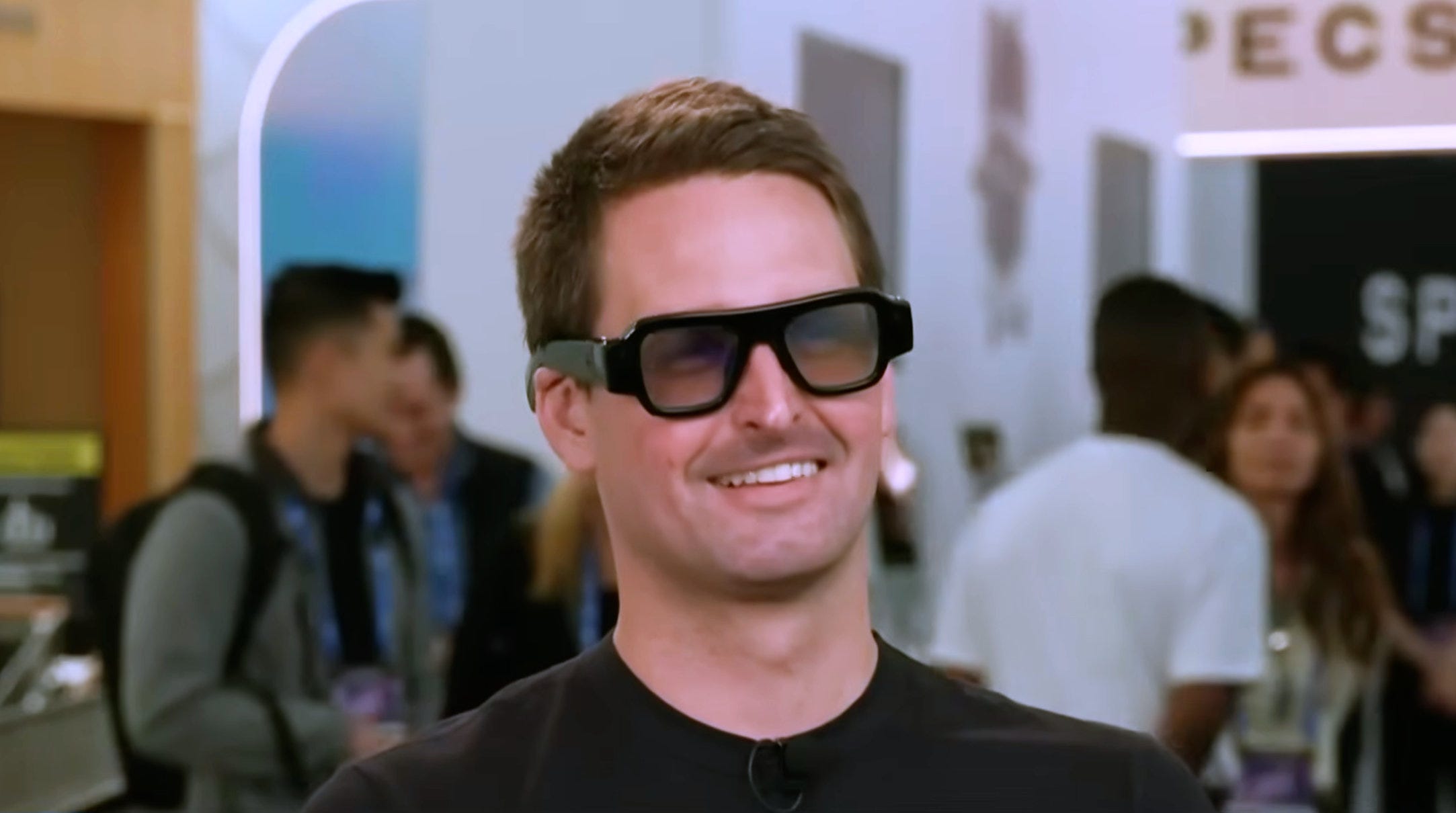
In the U.S., “eating your own dog food,” or dogfooding, is shorthand for company executives testing and using their own products as normal consumers might. But dogfooding isn’t just about testing. On another level, the term evokes the image of an executive demonstrating that the company’s product is so trusted, so beloved by its creator, that even he uses it away from the marketing glare of cameras and commercials. The message: You can trust that this product is good for you because we don’t just make it, we use it.
This trust-via-usage demonstration dynamic has always seemed particularly relevant when it comes to wearable technology. Next to putting a product into your body (food, pharmaceuticals, etc.), paying to put a product on your body is one of the most intimate things a consumer can do. So, in my years of covering wearable tech, the first thing I look for is whether the CEO is actually using the wearable tech outside of the launch event window. I think it’s reasonable to assume that, if a founder has invested millions, or hundreds of millions, into a product he expects the public to wear and use daily, he should do the same. But in the realm of smartglasses, that’s not always how things seem to work out.
At this weekend’s UFC Freedom 250 event, Meta founder and CEO Mark Zuckerberg made an appearance, but his Meta Ray-Ban smartglasses were nowhere in sight. Likewise, a quick check of his Instagram account reveals that, at least in the last few months, his non-marketing daily activities appear to be smartglasses-free. Zuckerberg isn’t alone, but he is the most high-profile wearable exec example available. Meanwhile, social media clout chasers have taken to using Meta’s glasses to record sometimes troubling interactions with strangers in public who don’t always know they’re being recorded to go viral. Predictably, this has led to some simmering cultural backlash against any kind of camera-enabled smartglasses worn in public.
So when Snap (maker of Snapchat and Spectacles camera glasses) returned to the spotlight this week with its new Specs augmented reality (AR) smartglasses, I was guardedly excited.
TO READ THE FULL ARTICLE, SUBSCRIBE OR VISIT MARSMag.com
New essays on tech, film, & entertainment innovation arrive by email. Subscribe to stay in the loop. All editorial text is written by humans.